
Ukraine has one of the most powerful steel-construction manufacturing bases in Eastern Europe – companies that not only kept their capacity but also grew it during the war. Today, steel construction is increasingly seen not as a niche solution, but as a key tool for the future reconstruction of the country – fast, reliable, and environmentally friendly.
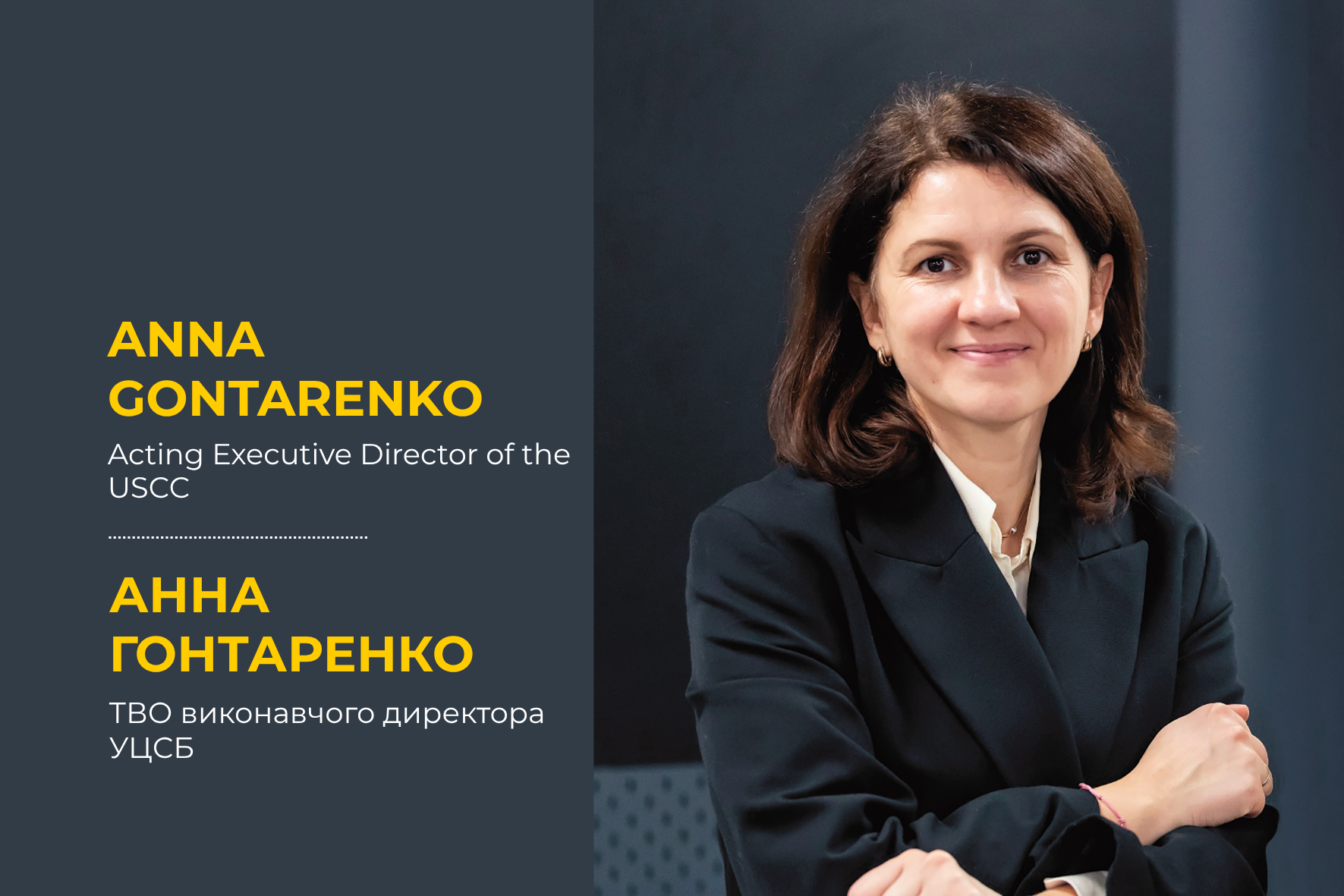
ANNA GONTARENKO, Acting Executive Director of the Ukrainian Steel Construction Center (USCC), talks about the state of the industry, innovative approaches, and the role of steel in Ukraine's recovery.
How would you describe the current state of the steel construction market in Ukraine?
During the full-scale invasion, Ukrainian preserved – and even partially increased their production capacities. Most Ukrainian manufacturers of steel structures are certified not only under Ukrainian legislation but also according to the EN 1090 standard and have CE marking, which opens access to the EU market. This is a significant advantage during reconstruction, as Ukraine has its own industrial base that can meet the demand for high-quality steel structures without imports.
What key trends do you observe — what is growing, what is stagnating, and what is undergoing transformation?
Compared to demand in 2022, the steel-structure market has grown by approximately 40% to date. In 2024, steel-structure production in Ukraine increased by 15% – reaching 91 thousand tonnes – and in 2025 it is expected to grow further by 10–12%, exceeding 100 thousand tonnes.
In 2024, consumption of galvanized steel products rose by 5.6%, but this growth slowed compared to 2023, when the market expanded by 45.5%. At the same time, Ukrainian producers covered only one-third of the market’s demand.
In 2024, the volume of apparent consumption of polymer-coated steel in Ukraine increased by 5.4% compared to 2023, reaching 292.2 thousand tonnes – which is still 15% below the 2021 level.
Why do you think Ukraine still builds mainly with concrete, while the entire developed world has already switched to steel?
Globally, steel construction accounts for about 20% of the non-residential sector, while in industrial and logistics facilities it varies by country from 50 to 80%.
In Ukraine, the share of steel construction currently stands at 13–15%, but it is steadily increasing.
Previously, concrete was preferred due to the habit of calculating only the “cost per square meter” of a building’s frame. However, today clients increasingly evaluate investments by considering speed, flexibility in redesign, and the potential for reuse and recycling of materials – advantages that are provided specifically by steel solutions.
Investors are increasingly paying attention to carbon footprint metrics, and steel – thanks to its recyclability – has the potential to support sustainable construction in the future.
What do you consider to be the most pressing issues in the steel construction segment today?
The most acute challenges for the industry remain the war and staff shortages – aspects that affect logistics, material costs and project implementation deadlines.
A critical issue is the shortage of qualified welders, assemblers, and project designers. That is why the USCC, together with its partners, is actively working on developing training programs, including within the framework of Swisscontact projects. Without addressing the personnel issue, the rapid reconstruction of Ukraine will be extremely difficult.
Ukrainian companies often talk about innovation, but in practice 90% of projects are built “the old way.” In your opinion, where is the line between words and real change?
The industry is gradually moving toward digitalization, and our members are already applying BIM elements at all stages of project implementation: project design, fabrication, and assembly.
The association participates in pilot digital project design programs together with the National Institute for Development Infrastructure and partners from Lithuania, which have already fully adopted BIM.
Preparations are currently underway for the transition to harmonized European standards (Eurocodes). According to our estimates, around 80% of industry representatives are ready to switch to Eurocode-based project design within a year. Full implementation will become possible once the national system of standards is phased out and through coordinated work of the relevant ministries.
What role can steel construction play in Ukraine’s post-war reconstruction?
Steel is a material that can provide the speed, precision, and reliability needed for Ukraine’s post-war rebuilding. Steel structures are manufactured in controlled factory conditions, which ensures consistent quality, minimizes the human factor, and shortens installation time.
What do you see as the development priorities for the industry over the next five years?
The further development of the sector will directly depend on the situation in the country, the pace of reconstruction, and the volume of investment. Residential construction has particularly strong potential, as steel usage in this segment remains the lowest today. There is room for large-scale adoption of combined solutions, modular systems, and light steel structures, which provide speed, energy efficiency, and project design flexibility.
USCC sees its role as an industry development platform – an expert hub that unites market players to advance modern standards and technologies. The key marker of success will be not only market growth, but also a shift in mindset, where steel becomes the norm in contemporary construction rather than an exception.
HOW SUSTAINABLE DEVELOPMENT IS TRANSFORMING UKRAINE’S CONSTRUCTION INDUSTRY
ANDRIY OZEYCHUK, Director of the construction company Rauta, explains the European decarbonization experience, environmental regulations for building materials manufacturers, and the impact of sustainable development on construction projects.
What is the concept of sustainable development, and what advantages does it offer to construction clients?
The concept of sustainable development aims to strike a balance between meeting the needs of the present generation and ensuring that future generations can meet their own needs. There is a common misconception that sustainable development is solely about improving the environment. In reality, it encompasses three interconnected pillars: the environment, the economy, and society.
Given the significant impact of construction on increasing CO₂ emissions, sustainable design should become a cornerstone not only of new development concepts but also of modern urban planning. In architecture, it is an essential approach to creating comfortable living conditions without harming the environment. The use of sustainable design in construction enhances the value and energy efficiency of buildings and also makes it possible to earn more points under LEED and BREEAM certification systems.
Is it actually feasible to create a Zero Energy Building (ZEB), and what is the payback period for such a solution?
Creating a ZEB is a cutting-edge European construction practice. These solutions are mostly applied in the development of residential buildings, but commercial property owners are increasingly investing in this technology as well, achieving nearly Zero Energy Buildings – structures with almost zero energy consumption. The core of a ZEB is generating energy from alternative sources and maximising the thermal performance of envelope structures, for which energy-efficient sandwich panels are used.
The payback period for investments in ZEB is 5-7 years and depends on the type of solutions used and the cost of energy in the region of construction.
How important is the implementation of environmental restrictions in Europe and Ukraine? Are Ukrainian construction-product manufacturers ready for them?
The European Union aims to reduce greenhouse gas emissions by 55% by 2030 and become a climate-neutral region by 2050. To achieve these goals, the EU adopted the Energy Performance of Buildings Directive (EPBD), which sets requirements for improving the energy efficiency of existing and new buildings – directly influencing the criteria for material selection.
In 2019, Ukraine adopted the Law “On the Fundamental Principles (Strategy) of the State Environmental Policy of Ukraine for the Period up to 2030,” which, unlike the EPBD, covers the entire ecosystem and all sectors of the economy, and sets guidelines for energy efficiency.
The European directive does not impose direct environmental restrictions on manufacturers of building materials or equipment. However, it creates incentives for them through requirements for improving the energy efficiency of buildings and decarbonizing the construction sector. If Ukraine implements elements of the EPBD, the demand for materials with better thermal and environmental performance will increase. This will intensify competition between Ukrainian and European manufacturers and push the former to invest in modern production processes to enhance the environmental friendliness and energy efficiency of their products.
Is decarbonization of Ukrainian manufacturing realistic?
The decarbonization of Ukrainian building-materials producers is realistic and, most likely, inevitable in the context of Ukraine’s alignment with the EU. However, it requires significant resources to implement.
When implementing decarbonization solutions, Ukrainian manufacturers can make use of advanced European experience. For example, the leading Finnish manufacturer of facades and roofing materials, Ruukki, had achieved a 59% reduction in CO₂ emissions from its operations by the end of 2023 compared to 2019, when annual carbon emissions amounted to 12 thousand tonnes. Since 2023, the company has been using “green” steel for the production of sandwich panels, ventilated facades, and roofing materials. This steel is produced using hydrogen, electricity, and biogas instead of fossil fuels. The residual product of such a production process is not carbon dioxide, but water.
#SteelConstruction #SteelStructures #UkraineRecovery #Construction #Industry #Innovation #Ukraine