
PUBLIC-PRIVATE PARTNERSHIPS IN UKRAINE
WHY THE LEGAL FRAMEWORK DOES NOT GUARANTEE REAL INVESTMENT
ANDRII PIDHAINYI, partner at the law firm Arzinger, co-head of the ‘Public Property Transactions’ and ‘Transport and Infrastructure’ practices.
In recent years, public-private partnerships (PPPs) have been the most widely discussed tool for attracting investment into the Ukrainian economy. And this is logical. Against a backdrop of chronic resource shortages in both the state and local budgets, the public sector has extensive needs for the restoration, modernisation and development of economic and social infrastructure. Consequently, the focus is on attracting private capital on a systematic basis, which could bridge a significant portion of this gap.
In 2025, a reform of public-private partnerships effectively took place: a new version of the Law of Ukraine ‘On Public-Private Partnerships’ (the PPP Law) was adopted, and major amendments were made to the Law of Ukraine ‘On Concessions’. This process involved members of parliament, international financial organisations, relevant ministries, local authorities, consultants and the Agency for Public-Private Partnerships, which was established back in 2018 but has only really stepped up its activities over the last two to three years.
At the international level, Ukraine is also recognised for its efforts to establish a comprehensive system of public-private partnerships at national and regional levels. In other words, in terms of the development of the legislative framework and the political will to rebuild infrastructure and develop the economy as a whole, we are seeing a consistent focus specifically on public-private partnerships and concessions.
At the same time, other mechanisms for attracting investment are either overlooked or restricted at the legislative level. For example, for the public sector, the mechanism for establishing joint ventures has been largely undermined by a rule requiring the state’s share to exceed 50% of the capital under all circumstances, with the exception of the defence sector and PPPs. Furthermore, the Law on PPPs contains a provision stipulating that investment projects with the characteristics of a public-private partnership must be implemented in accordance with the rules and procedures laid down by the relevant legislation.
Therefore, in light of these priorities and approaches, the question arises: how effectively is Ukraine implementing publicprivate partnerships in practice? Unfortunately, when assessing initiatives that have already been implemented, the situation appears far less convincing.
THE LEGISLATIVE FRAMEWORK IS IN PLACE, BUT THE WIDESPREAD IMPLEMENTATION OF PROJECTS AND THEIR QUALITY REMAIN IN DOUBT
Ukraine is not starting this journey from scratch. The Concessions Act was passed as far back as 1999. The Public-Private Partnership Act was passed in 2010. Logically, the country should already be reaping the benefits of many successful infrastructure projects. However, the reality is quite different.
Unfortunately, there are no statistics on the actual investments made within the framework of PPP projects in Ukraine. Therefore, the situation must be assessed using another indicator – the number of contracts signed and those that are actually being implemented. This is sufficient to understand the actual state of affairs.
According to data from the Ministry of Economy of Ukraine, as of January 2026, 201 contracts had been concluded under publicprivate partnership arrangements. Of these, only 19 are being implemented: 7 concession contracts, 4 joint venture agreements and 8 other types of contracts. A further 171 contracts are not being implemented: 114 are not being performed, and 57 have been terminated or have expired. A further 11 contracts have been suspended as a result of Russia’s armed aggression.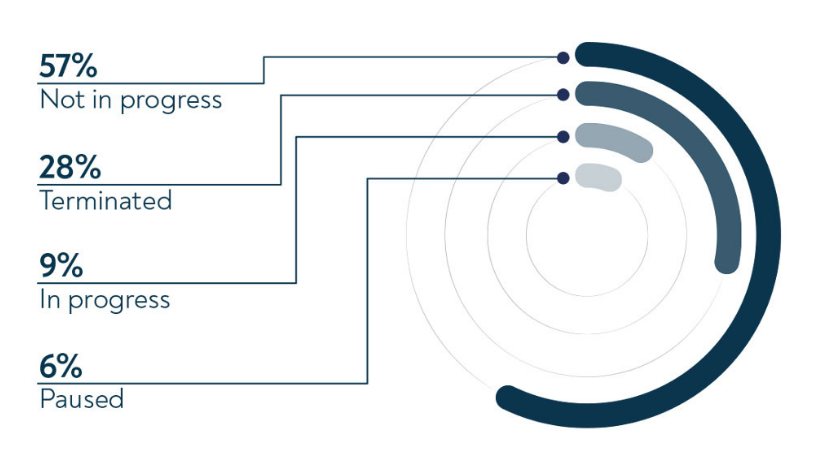
This is particularly striking when viewed against the backdrop of global statistics. Worldwide, the proportion of projects cancelled prematurely or halted due to default stands at around 3.4%. In other words, Ukraine’s problem lies not in the nature of PPPs themselves, but in the quality of preparation, institutional capacity and financial viability of specific projects.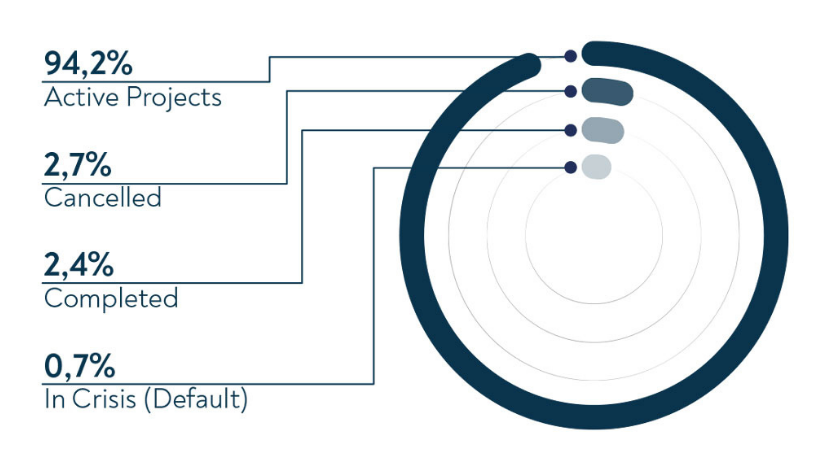
The main mistake in the planning and preparation of many potential PPP projects is the assumption that the partnership format itself automatically makes the project attractive to investors. In reality, this is not the way it works.
A public-private partnership project must pass a basic financial viability test. If it involves the private partner’s investment being reimbursed from the state or local budget, there must be convincing evidence that the relevant budget is capable of making such payments in the long term. Budgetary affordability, as an integral element of the analysis of any PPP project, may also be significantly constrained by the provisions governing the revenue and expenditure of the state or local budgets, as set out in the Budget Code.
Currently, payments to a private partner in the form of availability payments are guaranteed only for road sector projects – funded by the Road Fund. For public-private partnership projects in other sectors, such sources of funding are limited and not guaranteed.
In concession projects, where investment is recouped directly from the consumer, market research and financial analysis may reveal other problems – low demand or regulated tariffs that are set too low. In other words, consumers are not always willing to pay for services if tariffs are increased.
Consequently, the problem has two aspects: limited funds in the relevant budgets and low consumer purchasing power.
THE SECOND REASON – WEAK INSTITUTIONAL CAPACITY IN THE PUBLIC SECTOR
In a ‘public-private partnership’, it is the public partner that plays the decisive role. It is the public partner – the state or local authority – that defines the project parameters, draws up the tender conditions, prepares the eligibility requirements, sets the criteria for evaluating proposals and drafts the contract. The quality of these decisions determines the level of interest from investors and financial institutions, as well as the feasibility of the project at all stages of its life cycle.
This requires a strong in-house team within the relevant public partner – comprising financial, legal and technical specialists who understand the specific nature of PPPs and concessions. Their expertise must be sufficient to carry out the preliminary selection of projects, prepare technical terms of reference for advisers, and manage and monitor the performance of contracts.
In practice, such resources are often lacking at both national and local levels. Public authorities may not have sufficient funding to engage advisers, carry out high-quality analysis or prepare assets for the transaction. For example, it may be necessary to restructure a facility, audit property, clarify the legal status of assets or carry out a technical inventory. Without this, a high-quality transaction is impossible.
There is another factor – a lack of motivation among the heads of central and local authorities. A public-private partnership project cannot be prepared quickly. As part of the mandatory procedures, it is necessary to go through various stages, including feasibility analysis, preparation of assets, drafting of tender documentation, and the organisation and conduct of the tender. Overall, the procedure may take longer than the political tenure of a particular minister.
In the Ukrainian context, to demonstrate their efficiency and effectiveness, officials tend to focus on the final stage of any investment project – the ceremonial signing of the agreement. In such circumstances, decision-makers may hesitate to launch a PPP project, considering alternative instruments that would be completed within the expected timeframe of their term of office.
THE THIRD REASON – POOR PROJECT PREPARATION
Low institutional capacity and overconfidence, particularly at local level, inevitably lead to poor project preparation. The result is technically and economically justified proposals that are merely a formality, superficial demand analysis, inflated profitability expectations, incomplete risk analysis and projects that are unattractive to banks.
This factor is critical. For potential investors, banks and other financial institutions, it is not only the idea that matters, but also the quality of the project preparation. In this regard, the following come to the fore: a sound justification of commercial viability and revenue structure; a balanced and fair distribution of risks; transparency and non-discriminatory selection procedures; and access to information. If these issues are not resolved at the outset, the problem will not disappear. It will simply be carried over into the contract, and subsequently lead to constant amendments, conflicts, failure to fulfil obligations, termination of the contract or default by the project company controlled by the private partner.
Public-private partnerships do not tolerate half-measures: poor preparation is not only the result of tenders being ignored by investors and project defaults, but also a precursor to unplanned costs associated with legal disputes and the payment of damages.
THE PRIVATE SECTOR IS NOT ALWAYS PREPARED EITHER
It would be unfair to place all the responsibility solely on the state or local authorities. Private companies may also underestimate the specific challenges involved in participating in public-private partnership tenders. This is particularly true of businesses that have historically grown through their own resources, by scaling up production or improving operational efficiency, but without expanding through M&A or other infrastructure transactions. Such companies may view PPPs as simply a form of cooperation with the public sector using their internal resources. This is a misconception.
Public-private partnerships operate on a different logic, based on thorough and in-depth project preparation in accordance with established requirements and procedures, and designed to ensure that potential investors are adequately prepared for participation in the tender. Participation in the tender process requires a sustained focus of internal human resources and adherence to deadlines for submitting the necessary documents, which significantly diverts staff from day-to-day operational activities. It is therefore important for a private partner to engage not merely external consultants, but advisers with practical experience of implementing PPP projects specifically in Ukraine.
This is not a made-up problem. In practice, we are already aware of situations where the client – a potential investor – within the framework of a private initiative for a PPP project, incorrectly formulated the technical specifications for the preparation of the application and the feasibility study in accordance with the public-private partnership procedure, whilst the commercial and financial consultant engaged, for their part, accepted these terms and prepared the documentation without due regard for the requirements of the legislation on public-private partnerships. The outcome was predictable: the project did not even reach the city council stage. The result was a waste of time and money and, most importantly, a lack of results.
WHAT NEEDS TO BE CHANGED
The issue of quality and the widespread implementation of PPPs cannot be resolved solely through robust legislation and political will. The legislative framework is important, but it is not the key to developing successful projects.
The first thing a public partner should do is to plan capital expenditure based on prioritising national or regional needs. Step by step, from drawing up a list of public investment projects to identifying available sources of funding: direct public procurement using budget funds, or PPPs involving private or mixed funding.
Secondly, a professional team must be formed based on the distribution of key areas of expertise: management, finance, law and relevant engineering support. The core expertise of all team members is expertise in the field of PPPs. This is a distinct area of competence that requires specialised training. Opportunities for such training already exist in Ukraine – ranging from practical workshops to courses leading to international certification.
A positive example is the establishment within the Ministry of Community and Territorial Development of a separate department for PPPs and the appointment of a deputy minister responsible for this area. This demonstrates that priorities can be set not only through declarations, but also through the reallocation of internal resources.
Thirdly, the active use of support from international financial organisations and donors. The problem of a lack of funds for project preparation, including the engagement of external consultants, can be resolved through grants and technical assistance. Such support is already available in Ukraine thanks to the establishment of various project preparation facilities.
Fourthly, KPIs should be established for managers responsible for attracting investment. The focus should be not on the number of agreements concluded, but on the number of projects launched and the quality of their preparation.
QUALITY AND SCALING
The key challenge at this stage in the development of publicprivate partnerships in Ukraine lies in ensuring high-quality project preparation and their gradual scaling up at national and regional levels. Quality begins with the concentration of professional resources – the creation of dedicated departments or multi-disciplinary teams responsible for planning, preparing technical briefs for advisers, and monitoring and managing projects. Equally important are investments in staff – in particular, through participation in practical training and courses leading to international certification. At the same time, the scaling up of PPPs and concessions must be based on the development of a realistic project pipeline following the ‘from simple to complex’ principle, and on cooperation with international financial organisations and project preparation facilities, which can provide technical and financial support during the preparation phase of specific initiatives.
#PPP #PublicPrivatePartnership #Investment #Infrastructure #UkraineRecovery #Arzinger #Ukraine